
4 Reasons Reiki Improves Sleep and What Happens to Your Body During Sessions
About 1 in 3 American adults do not get enough sleep (CDC). You have probably tried melatonin. You may have cut screen time or bought a white noise machine. But you still lie awake at 2 a.m. with your mind running.
60 to 75 minutes · Private Melrose studio · Certified Reiki Master Teachers
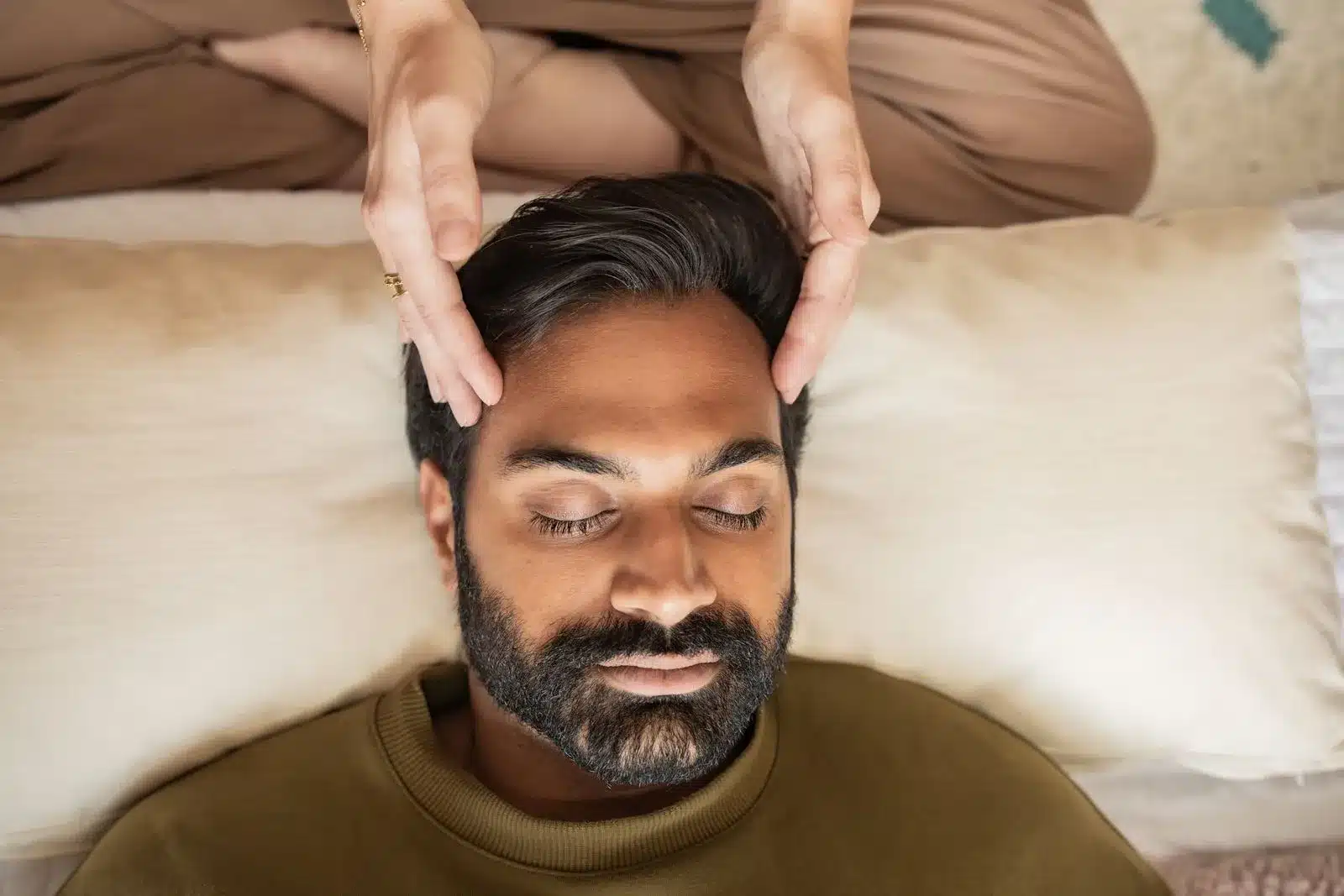
The issue may not be your bedroom. It may be your nervous system stuck in overdrive. Reiki for sleep works at that deeper level, helping your body shift out of fight-or-flight so it can rest.
We are Jaime and Yonatan Elkayam, Reiki Master Teachers at Word of Mouth Integrative Wellness in Los Angeles. We see this pattern every week. Clients walk in wound up. Their shoulders sit near their ears. Their jaw is clenched. By the end of a session, their breathing has slowed and their body has softened. Many tell us they sleep better that same night.
Can Reiki Help with Sleep?
Yes. Reiki can help with sleep by activating your parasympathetic nervous system. That is your body’s built-in rest and recovery mode. During a session, heart rate slows and muscle tension drops. Your body shifts out of the stress state that keeps you awake at night.
A 2017 review in the Journal of Evidence-Based Complementary & Alternative Medicine (McManus) found that eight of 13 placebo-controlled studies showed Reiki outperformed placebo, with the strongest evidence for activating the parasympathetic nervous system. A separate 2014 review by Thrane and Cohen in Pain Management Nursing found effect sizes ranging from small to very large for reductions in pain and anxiety. Researchers in both reviews noted that more rigorous trials are needed, but the pattern held across studies. Most of our clients report deeper sleep within one to three sessions. Many notice a change the night of their first appointment.
See current pricing and what a session looks like for Reiki energy healing sessions in Los Angeles.
Your Nervous System Is the Real Sleep Problem
Your body has two main operating modes. The sympathetic mode is your alert system. It handles fight-or-flight responses. The parasympathetic mode is your recovery system. It handles rest, digestion, and repair. Sleep requires the parasympathetic switch to turn on.
Chronic stress keeps your sympathetic system in charge. Even when you are lying in bed, your body stays on low-grade alert. Your heart rate stays slightly elevated. Your muscles stay slightly tense. Your brain keeps scanning for problems. This is why so many sleep tips fail. The issue is not the room. It is your internal state.
If you work in a caregiving, healing, or high-empathy role, this hits harder. You absorb other people’s stress all day. By bedtime, your nervous system has been running at full speed for hours. No amount of lavender spray fixes that.
Reiki works at this level. It creates conditions where your nervous system can finally downshift. Not by force. By providing a safe, held space where your body can let go on its own terms.
“After years of struggling with anxiety I finally felt hopeful after my reiki session.”
So what actually happens in your body during a Reiki session? Here is what the research and our clients consistently report.
4 Ways Reiki Helps Your Body Fall and Stay Asleep
It Activates Your Relaxation Response
Harvard researcher Herbert Benson coined the term “relaxation response” decades ago. It describes the exact opposite of the stress response. Heart rate drops. Blood pressure lowers. Breathing slows. Muscles soften.
Reiki sessions consistently trigger this response. A 2004 preliminary study by Mackay et al. in the Journal of Alternative and Complementary Medicine found that heart rate and diastolic blood pressure decreased significantly in Reiki participants compared to both a sham placebo group and a rest-only control group. At Word of Mouth, we pair Reiki with guided breathwork. The two practices compound each other. Breathwork starts the downshift. Reiki deepens it.
It Lowers Cortisol and Stress Hormones
Cortisol is your primary stress hormone. When cortisol stays elevated at night, it can disrupt your body’s natural melatonin rhythm. Melatonin is the hormone your body needs to fall and stay asleep. High cortisol at bedtime means your body is stuck in alert mode, no matter how tired you feel.
A 2011 study by Diaz-Rodriguez et al. in Biological Research for Nursing found that Reiki sessions lowered salivary cortisol in healthcare professionals with burnout. This matters if you spend your days caring for other people. Your cortisol load builds all day. Reiki helps your body clear it.
It Releases Stored Muscle Tension
You cannot fall into deep sleep while your body is bracing. Chronic tension in your jaw, neck, and shoulders is both a sign of stress and something that keeps the stress cycle going. Your body reads that tension as a signal to stay alert.
Clients regularly tell us they feel physical release during sessions. Tightness in the neck softens. Weight lifts from the shoulders. That physical letting-go signals your brain that it is safe to rest. We address this through Reiki combined with somatic awareness and movement, not just passive lying down.
It Quiets Mental Chatter Before Bed
The racing mind is the most common sleep complaint we hear. You lie down and your brain starts its review of every conversation, every task, every worry. Standard advice says “just meditate.” But many people cannot meditate on their own. The thoughts keep pulling them back.
Reiki works like guided meditation, but with support. A trained practitioner holds the space. You do not have to manage the process alone. The session interrupts the rumination loop. Clients tell us they feel “more calm, focused, less scattered” in the days that follow. That quieter mind carries into bedtime.
| Standard Sleep Tip | What It Targets | What Reiki May Address |
|---|---|---|
| Melatonin supplements | Low melatonin levels | Stress hormone levels that affect melatonin rhythm |
| White noise machines | External sound distractions | Internal nervous system state |
| Screen time limits | Blue light exposure | Parasympathetic activation |
| Stretching before bed | Surface muscle tension | Stored tension patterns in the body |
| Sleep apps and trackers | Awareness of sleep quality | Nervous system conditions for rest |
What Happens to Your Body During a Reiki Sleep Session
Many people avoid trying Reiki because they do not know what to expect. Here is what a typical session at Word of Mouth looks like, step by step.
Before and During the Session
We start with a short conversation. We ask about your sleep patterns, your stress levels, and what you are hoping for. No vague promises. Just a clear picture of where you are and what might help.
Next, we guide you through breathwork. This begins the nervous system shift from alert mode to rest mode. You lie down fully clothed on a treatment table. There is nothing to do. Nothing to perform. Just receive.
During the Reiki portion, we work with our hands placed lightly on or just above your body. We often layer in sound healing with singing bowls or other instruments. The combination deepens the relaxation.
We often see clients’ breathing change within the first 10 minutes. Their shoulders drop. Their jaw unclenches. The body seems to know what to do once it feels safe enough to let go.
What You Will Feel
Here are five things most clients feel during their first session:
- Warmth spreading through the hands, chest, or belly
- A pleasant heaviness in the limbs
- Tingling or gentle pulsing sensations
- Breathing that naturally slows and deepens
- Falling asleep on the table
Does Reiki put you to sleep? Many clients do fall asleep during sessions. This is normal and a good sign. It means your nervous system has shifted into parasympathetic mode. Your body is doing exactly what it needs to do.
After the session, many people sleep deeply that same night. Some experience a processing period of 24 to 48 hours where old tension continues to release. We’ll talk you through this before you leave, so nothing catches you off guard.
“The Reiki puts my mind and body in a whole other plane, a deeply relaxed liminal space.” (Misty S., Word of Mouth client)“My nervous system was much more settled and I felt a deeper sense of trust for life.” (Leucas M., Word of Mouth client)
What the Research Actually Says (and What It Does Not)
We believe in honesty about the science. Here is where the evidence stands.
Two Reviews, One Pattern
Two independent reviews support this. McManus (2017), published in the Journal of Evidence-Based Complementary & Alternative Medicine, reviewed 13 placebo-controlled Reiki studies and found that eight showed Reiki outperformed placebo, particularly for activating the parasympathetic nervous system. Separately, Thrane and Cohen (2014) in Pain Management Nursing reviewed seven randomized trials and calculated effect sizes ranging from small to very large for reductions in pain and anxiety. Both reviews noted that study quality varies and the specific mechanism behind Reiki is still debated, but the pattern of relaxation and symptom improvement held across studies.
The relaxation response itself is well-established physiology. That is not debated. The open question is whether Reiki adds something beyond what any caring, focused, hands-on session would produce. For your sleep, the practical outcome matters most. Your nervous system regulates. Your stress hormones settle. Your muscles release. Those results are observable.
Hospital Adoption
A 2008 USA Today report, citing an American Hospital Association survey, found that roughly 15% of U.S. hospitals (over 800) offered Reiki as part of patient services in 2007. Both the Cleveland Clinic and UCLA Health include Reiki in their integrative medicine programs today.
We are not going to claim that Reiki moves mystical energy through invisible channels. We are also not going to pretend that your body’s ability to heal itself is not real. We sit where science and direct experience meet. We tell every new client the same thing. Come skeptical. Stay for the results you can measure yourself. Did you sleep better? Do you feel more rested? Those answers are yours to track.
When to See a Doctor First
Reiki is not a replacement for medical treatment. If you suspect sleep apnea, restless leg syndrome, or another diagnosed sleep disorder, see your doctor first. Reiki works best as a complement to medical care, not a substitute.
What are the disadvantages? The main risk is mild. Some people feel tired or emotionally tender for a day or two after a session as stored tension releases. Serious side effects are rare. We prepare you for this and stay accessible by phone or text if something comes up.
Who should not have Reiki? People with active psychosis or severe dissociative disorders should work with a mental health provider before starting energy work. If you are pregnant, let your practitioner know so the session can be adjusted. Beyond that, Reiki is gentle and safe for most people.
How to Know If Reiki for Sleep Is Right for You
Reiki may be a good fit for you if:
- You have tried sleep hygiene basics and they are not enough
- You carry physical tension that does not resolve with stretching
- You feel “wired but tired” at bedtime
- You work in a caregiving, healing, or high-empathy role
- You have tried therapy and want to add body-based support
Consider other options first if:
- You have not been evaluated for sleep apnea or other medical conditions
- You are looking for a one-time fix that solves everything permanently
At Word of Mouth, your first step is a Vision Session. That is a real conversation with Jaime or Yonatan about what you are dealing with and whether Reiki makes sense for your situation. No pressure. No sales pitch.
Sessions are $85 each. No hidden fees. No upsell packages. Payment plans are available. You reach us directly by phone, email, or text. Not a receptionist. Not an auto-reply. Us.
Your Next Step
Reiki for sleep works by helping your nervous system shift out of overdrive. Your body already knows how to rest. It just needs the right conditions to do it.
At Word of Mouth, we practice trauma-informed Reiki combined with breathwork, movement, and sound healing. Our pricing is transparent. You get direct access to Jaime or Yonatan. We do not oversell and we do not make promises we cannot back up.
What clients say
In this cozy, private loft off Melrose, you've stumbled upon a haven where reiki and sound healing recharge your batteries. Carefully curated sounds envelop you, and it's as soothing as a spa day, but from the inside out.
Reiki puts my mind and body in a whole other plane, a deeply relaxed liminal space.
Reiki for sleep, answered

Ready to book your sleep-focused session?
Reiki for sleep sessions run 60 to 75 minutes in our private Melrose studio, with Certified Reiki Master Teachers. New client bookings take two minutes online.